
Reviewed · TOURS IN ANTIGUA
Fliteboard EFoil Lesson
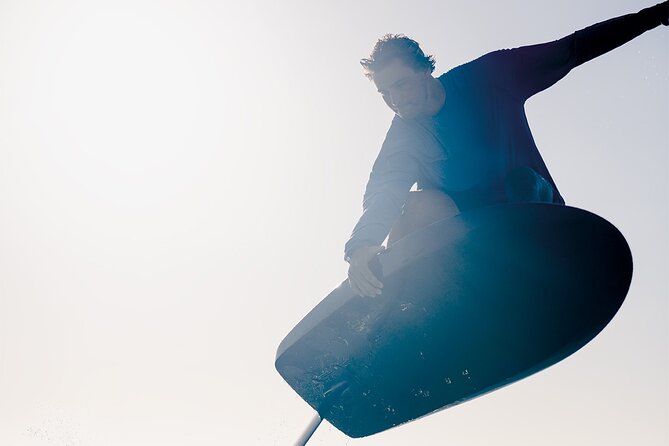
The magic of this Antigua efoil lesson is simple: the board lifts above the water, and you feel as if you are flying across English Harbour. I like the warm, sheltered setting and the clear step-by-step teaching, which starts with lying down before asking you to stand. Jaycee, also called JC, is one of the instructors praised for getting beginners moving quickly.
I also like that your group has the session to itself. That gives the instructor room to focus on your progress, rather than rushing you through a crowded class. The main drawback is that the lesson lasts only about 90 minutes, with 15 minutes on land and roughly 60 minutes in the water, so you have limited time to master a new sport.
Key points to know before booking
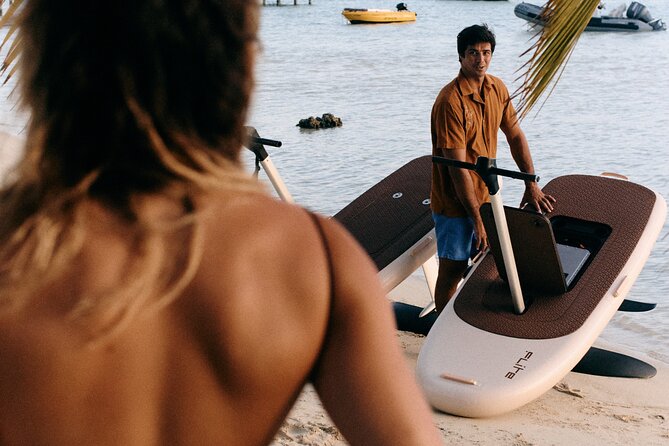
- You learn in English Harbour: The warm, sheltered water provides a calmer setting for your first attempts.
- The lesson begins on land: A 15-minute theory session covers how an efoil works and the rules for safe use.
- Progress starts at water level: You first lie on the board, then move to your knees before trying to stand.
- Certified national instructors assist closely: Jaycee and JC are named instructors associated with the experience.
- Your group has a private session: Only your booking group participates.
- The price is $185 per person: Free cancellation applies when you cancel at least 24 hours before the start time.
What riding an efoil actually feels like
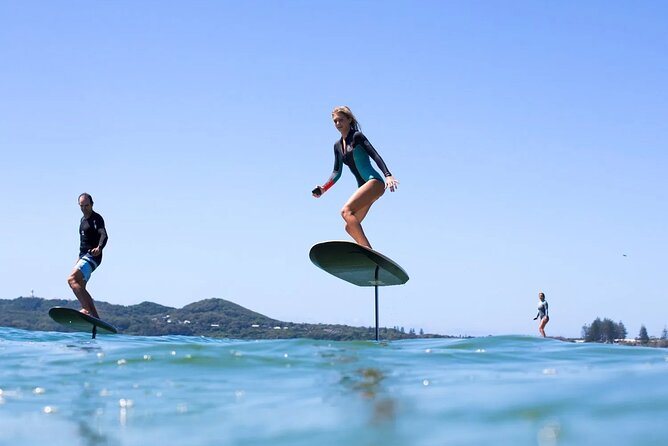
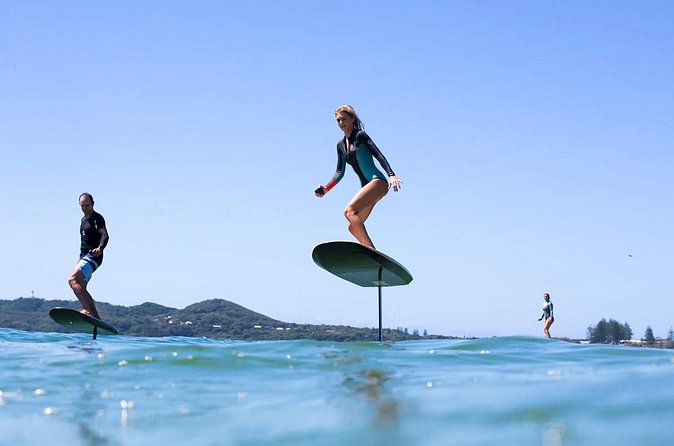
An efoil is an electric-powered board with an underwater foil. As you gain speed, the foil lifts the board above the surface, leaving you gliding with less contact against the water.
That sounds easy until you try to balance on a board that is moving and rising at the same time. The lesson sensibly avoids throwing you straight into the hardest part. You first learn the board’s basic behavior, then build toward standing and controlled flight.
The first successful lift is likely to be the moment that makes the cost feel worthwhile. Several participants have managed to stand and foil within the first hour, but you should treat that as a possible result rather than a promise. Balance, confidence, and the instructor’s advice all matter.
You may spend much of the early session simply learning how to keep the board stable. That is not wasted time. It gives you a feel for the controls and helps prevent the common beginner mistake of trying to rise before you can steer.
A few more things to do in Antigua worth a look
- All About Jerk Cooking Class
★ 4.7 · 19 reviews - St. John’s: Rum Cooking Class with 6 Rum Tastings
★ 5.0 · 6 reviews
Starting at Dockyard Drive in English Harbour
The meeting point is at 268J+XC8, Dockyard Drive, English Harbour, Antigua and Barbuda. The activity begins and ends at this same point, which keeps the arrangement simple.
The location matters because the lesson takes place around English Harbour, an area known for calm, sheltered water suited to beginner instruction. You are not being sent straight into open coastal conditions for your first attempt. That can make the learning process less intimidating, especially when your attention is already split between the board, the controls, and your balance.
The booking includes a mobile ticket, and confirmation is provided at the time of booking. You should still check the meeting details carefully before setting out, since water activities depend on arriving at the correct dock or launch point.
The activity is booked around 13 days in advance on average. That is a useful sign that you should not leave it until the last minute if this is important to your Antigua plans. A private lesson has limited instructor time, and popular morning or afternoon slots may not remain open.
The first 15 minutes: learn the machine before the water
The session starts with a short theory lesson of about 15 minutes. You learn how an efoil works, how to use it correctly, and the basic rules that help keep the activity safe.
This part may feel brief, but it is important. An electric foil board is not just a standard paddleboard with a motor. The foil below the board changes how the board reacts as speed builds, and you need to understand that before trying to lift clear of the water.
The safety briefing also gives you a better sense of what the instructor will ask you to do. Instead of guessing when to shift your weight or how to respond when the board rises, you begin with a simple plan.
All courses are conducted under safety regulations and supervision. Certified national instructors stay closely involved, especially as you move from basic board control to your first standing attempts.
The first water stage: lying down and finding balance
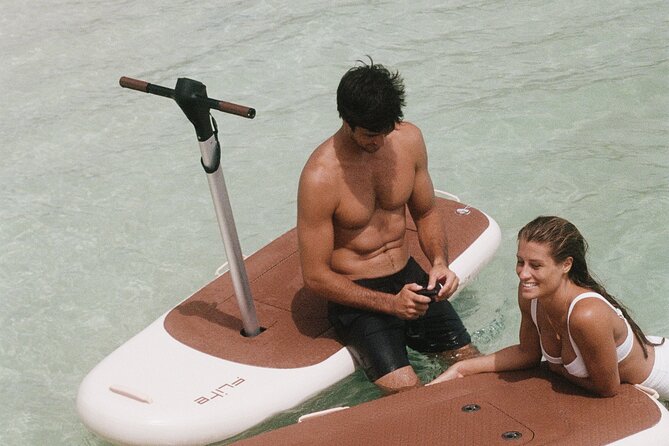
Once you enter the water, you begin lying on the board. This is the least glamorous part of efoiling, but it is the right place to start.
At this stage, you get familiar with the board’s movement and the power system without also having to manage your full body height. You can focus on direction, speed, and the feel of the board beneath you.
The aim is not simply to travel in a straight line. You are learning how small movements affect the board. A beginner who tries to stand too early can lose control quickly, so the instructor uses this stage to help you build a steady base.
Expect some trial and error. The board may feel more sensitive than you expect, and your first attempts may be short. The sheltered harbor setting is useful here because it gives you a more forgiving place to work through those early mistakes.
Same island, a different sort of day:
- Adventure Antigua – The Xtreme Circumnavigation
★ 5.0 · 959 reviews - Scenic Full Day Tour of Antigua
★ 5.0 · 472 reviews - Snorkel – Lobster Lunch Cruise to Bird Island and Paradise Reef
★ 5.0 · 438 reviews - Adventure Antigua – Eli’s Original Eco Tour
★ 4.5 · 238 reviews
Kneeling is the bridge to standing
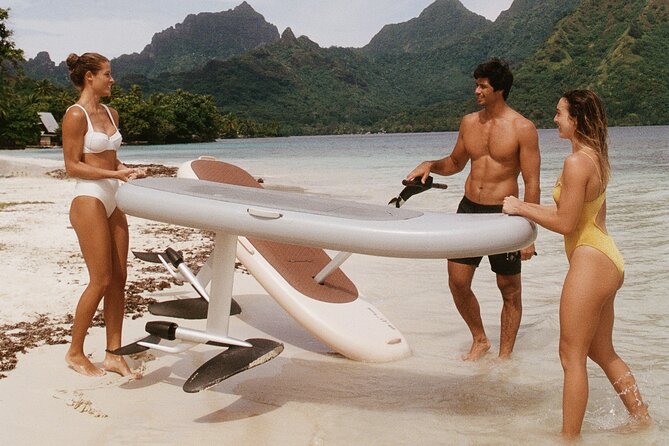
After lying down, you progress to your knees. This is the point where the activity begins to feel like a real board sport rather than a lesson in handling equipment.
Kneeling raises your center of gravity, so balance becomes more demanding. You also begin to understand how your posture affects the board. The instructor can watch your position and give small corrections before you attempt to stand.
This stage is where patient coaching matters most. The instructor is not just giving a long explanation and sending you off. The teaching is practical, with guidance as you work through each change in position.
Jaycee, also known as JC, is specifically associated with helping beginners through this progression. His instruction is described as relaxed and helpful, which is useful for a sport that can feel awkward at first. A calm instructor can help you avoid turning a wobble into a full loss of confidence.
Standing up and making the first flight
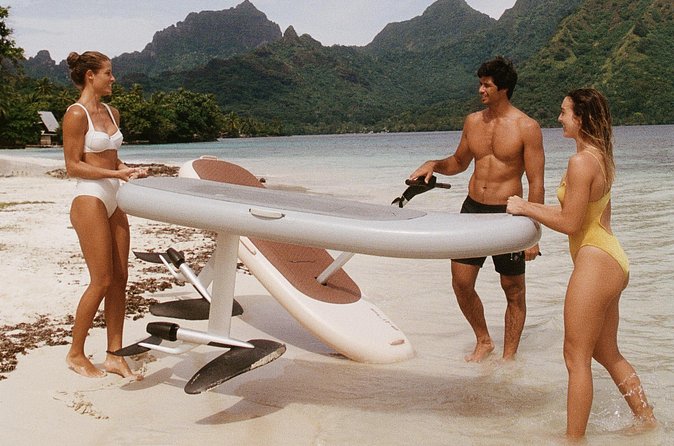
Standing is the biggest hurdle for most beginners. You must rise without placing too much weight forward or back, keep your feet steady, and respond to the board as it starts to move.
The instructor assists closely when you are ready. You are not expected to guess when to try. The lesson builds toward standing only after you feel confident enough at the earlier stages.
Once standing, the next goal is to lift the foil and maintain a smooth glide. This is the part that gives efoiling its unusual sensation. The board is no longer dragging across the surface in the usual way, and even a short period above the water can feel thrilling.
Some people have reached the foiling stage within about 30 minutes, while others have been standing and flying by the end of the hour. Use those time markers as encouragement, not a schedule. If you need the full session to reach standing, the lesson has still done its job.
Turning may come toward the end for people who progress quickly. One account describes beginners turning with ease by the close of the session, while another notes that a first-time group was standing and foiling after about 30 minutes. Your result will depend on how quickly you find your balance and how much control you gain.
Why the private format improves the lesson
Only your group participates in this activity. That is one of its strongest practical features.
A private session means the instructor can adjust the pace to your group rather than following a fixed class schedule. If you need more time on your knees, you are not holding up a line of strangers. If you progress quickly, you can move toward turning and longer flights.
This format is especially useful for couples, families, and small groups with mixed confidence. Two adults can learn together, and the supplied feedback includes a group of teenagers and their fathers riding around the harbor. The private setup may also make first attempts feel less self-conscious.
The tradeoff is price. At $185 per person, this is not a casual beach rental. You are paying for instruction, supervision, and a private session rather than simply borrowing equipment for an hour.
Is $185 good value?
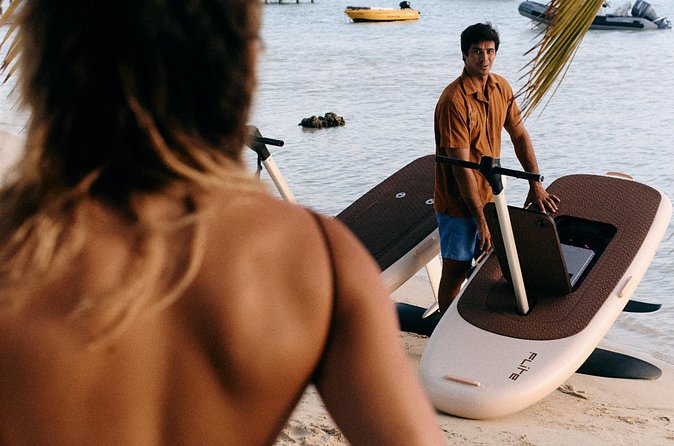
The price makes the most sense if you want to learn the sport, not just have a brief ride.
You receive a theory session, about an hour of practical instruction, certified national instructors, equipment, safety supervision, and a private group format. For a specialist water activity that requires trained instruction and powered equipment, the cost is easier to justify than it would be for an ordinary paddleboard rental.
Still, you should keep your expectations realistic. Ninety minutes is enough for a first lesson, but it is not enough to become an expert. You may stand and foil, or you may spend most of the session building basic control. Either outcome is normal for a first attempt.
The strongest value comes if you reach the water with the right goal: learn the fundamentals, enjoy the setting, and see if efoiling is a sport you want to pursue again. If you only want guaranteed long rides, the short lesson and beginner learning curve may feel limiting.
Who should book this Antigua activity?
This lesson suits adults and teenagers who want an active water experience and are willing to learn through a few awkward attempts. The supplied information says most people can participate, and service animals are allowed.
You do not need to arrive as an experienced foiler. The teaching is designed for beginners, and the progression from lying down to kneeling to standing gives you a clear starting point.
It is also a good choice for a couple or small private group that wants to learn together. The instructor can work at your pace, which matters when one person picks up balance faster than another.
You should think twice if you dislike falling, balancing, or learning a new physical skill under time pressure. The setting is friendly and well supervised, but no instructor can remove the normal challenge of standing on a moving board.
Timing, transport, and cancellation details
The tour lasts approximately one hour and 30 minutes. The stated lesson includes about 15 minutes of theory on land and 60 minutes in the water, leaving the rest of the appointment for the activity’s overall timing.
The meeting point is near public transportation at Dockyard Drive in English Harbour. The activity returns to the same meeting point, so you do not need to arrange a separate end location.
Confirmation arrives when you book, and a mobile ticket is available. Free cancellation applies if you cancel at least 24 hours before the local start time. Cancellations or changes made within 24 hours are not accepted for a refund.
The experience provider is Falmouth Ocean Club. The activity is recommended by all recorded participants and has a five out of five rating from 12 recorded reviews. That is a small sample, so I would treat it as encouraging rather than a guarantee that every first attempt will produce a long, smooth flight.
Practical advice for getting the most from the session
Arrive ready to listen before you think about standing. The theory portion is short, and the instructions about how the foil board works will make the water practice easier.
Do not compare your progress too closely with another person in your group. Some people stand quickly, while others need more time to learn the board’s movement. The private format gives the instructor room to adapt, so let the lesson progress in the order that works for you.
Pay close attention to the shift from kneeling to standing. The instructor’s small corrections may be more useful than trying to force the board into flight. Early control is more important than an impressive first run.
If your group has different ability levels, tell the instructor through your actions and questions. One person may be ready to work on turning while another is still finding balance. A private session is most useful when the pace stays flexible.
Should you book the Fliteboard efoil lesson?
Book it if you want a fresh, active Antigua experience and like the idea of learning a skill rather than simply being taken on a ride. The sheltered English Harbour setting, private format, and patient progression from lying down to standing make this a strong beginner lesson.
The price is high for a 90-minute activity, and your foiling time may be short if balance takes longer to develop. But the session offers more than equipment hire: you receive direct instruction, safety supervision, and a genuine chance to learn the basics of a sport that feels unlike ordinary board riding.
For a couple, family, or small group looking for something beyond beach time, I would book it, especially if you can reserve your preferred date well ahead. Go in expecting a learning session, not guaranteed flight, and the $185 price is easier to appreciate.
FAQ
Where does the Fliteboard efoil lesson begin?
It begins at 268J+XC8, Dockyard Drive, English Harbour, Antigua and Barbuda.
Where does the activity end?
The activity ends back at the meeting point.
How long does the lesson last?
The full experience lasts approximately one hour and 30 minutes.
How much time is spent on theory?
The theory session on land lasts about 15 minutes.
How much time is spent in the water?
The practical water session lasts about 60 minutes.
How much does the lesson cost?
The price is $185 per person.
Is this a private activity?
Yes. Only your group participates in the activity.
Are the instructors certified?
The lesson is conducted under supervision by certified national instructors.
Can service animals participate?
Yes. Service animals are allowed.
What is the cancellation policy?
You can cancel up to 24 hours before the local start time for a full refund. Cancellations or changes made less than 24 hours before the start time are not accepted for a refund.
Just added in Antigua
- Under the Sea snorkeling(Stingray/Kayak/ Power Snorkel available)★ 3.0 · 8 reviews
- Nightlife Tour of Antigua and Barbuda★ 4.5 · 8 reviews
- Glenmon taxi and tours★ 5.0 · 8 reviews
- North Coast Tour★ 4.5 · 7 reviews
- Half-Day Small-Group E-Bike Guided Tour in Antigua★ 3.5 · 8 reviews
- Antigua Airport Private Roundtrip Transfer to and from Royalton Antigua Resort★ 4.5 · 30 reviews
- Antigua Photoshoots – Blue Hues and Golden Hours★ 5.0 · 22 reviews
- Caribbean Stonehenge – Hike on Green Castle Hill, Antigua.★ 5.0 · 10 reviews
Tours in Antigua, compared.
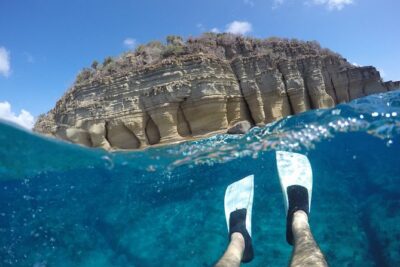
Adventure Antigua – The Xtreme Circumnavigation
Read our review →
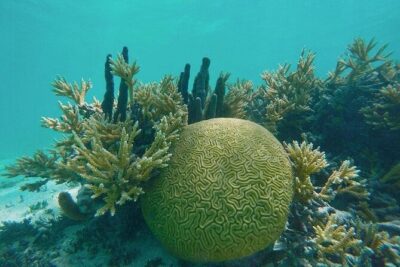
Snorkel – Lobster Lunch Cruise to Bird Island and Paradise Reef
Read our review →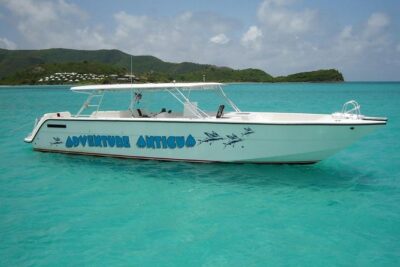

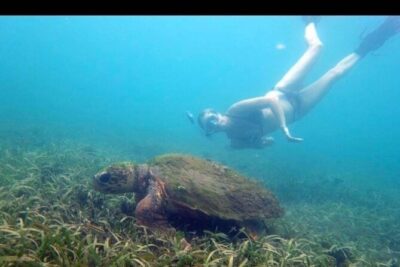
Private Snorkeling and Sightseeing Tour of Antigua
Read our review →
TRIPLE ACTIVITY TOUR, Bike Kayak Hike, ANTIGUA
Read our review →Browse the lists this tour appears in